
Retirement Readiness Tops Middle-Class Americans’ Financial Goals
Jun 10, 2026



For eight straight quarters, ACLI’s Financial Resilience Index has stayed above historical norms. This is a good sign for America’s middle class, as the Index measures middle-class households’ abilities to manage financial challenges and plan for a stable future.
Strong resource resilience fueled by retirement asset growth helped the overall October Index remain positive. Nevertheless, prolonged inflationary pressures may be making many middle-class households apprehensive about their financial future.
Half of middle-class households are concerned about sustainably affording daily essentials like food and electricity over the next year, according to a YouGov survey accompanying the October Index. Plus, 41% said they would need to borrow money to pay for an unexpected $5,000 expense.
For many middle-class households, an out-of-the-blue event like a car accident or a job layoff could be financially devastating. These families usually don’t possess the financial wherewithal of higher-income families, but their financial resources make them ineligible for government safety net programs set up for lower-income households.
Fortunately, life insurers help fill part of this gap by providing products created to help middle-class families manage their financial risks. Families turn to supplemental benefits to handle expenses health insurance won’t cover; life insurance to cover the financial loss after an unexpected tragedy and annuities to provide unending guaranteed income. These are just some of the ways that America’s life insurers provide certainty and security for middle-class families nationwide.
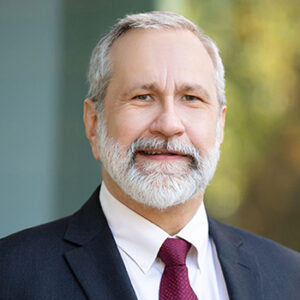
Andrew Melnyk is Vice President, Research and Chief Economist at the American Council of Life Insurers (ACLI). He holds a doctorate in economics and is a Certified Business Economist. His functions at ACLI include authoring white papers; managing the production of statistical publications; and managing ACLI’s Research Department. Prior to joining ACLI in 2005, he held positions in academia, government, and the private sector, both in the U.S. and abroad.